

How Fuel Storage Failures Lead to Environmental Prosecutions and Clean-Up Liability

Fuel storage is often treated as a routine operational requirement, but when it goes wrong the consequences can escalate quickly. A fuel spill does not need to be large in order to create serious disruption. Even a relatively small spill can contaminate land, groundwater, or nearby drains, resulting in significant cleanup costs, legal liability, and long-term environmental impacts.
At The Petrol Tank Company, we work with businesses across the UK that rely on safe and compliant fuel storage. One of the most common issues we encounter is a lack of understanding around how quickly a spill can develop and how expensive the clean-up process can become once oil begins to spread beyond the immediate source.
Understanding fuel spill clean-up costs is therefore not just about budgeting for worst-case scenarios. It is about recognising how preventable these incidents are and how proper storage, inspection, and containment measures can reduce both risk and liability.
Key takeaways
Fuel spill clean-up costs can escalate rapidly depending on the size of the spill, the type of oil, and how quickly containment measures are implemented. Early action is essential to minimise environmental harm and financial impact.
Legal responsibility for fuel spills lies with the polluter, and failure to comply with regulations can result in significant fines, legal action, and long-term remediation costs enforced by the Environment Agency.
Preventative measures such as regular tank inspections, proper containment systems, and staff training are critical in reducing the risk of spills and limiting the extent of contamination if a spill occurs.
Immediate response to a spill, including deploying spill kits, protecting drains, and contacting professional clean-up services, is crucial to control the spread of oil and reduce clean-up charges, production losses, and reputational damage.
What do fuel spill clean-up costs look like in practice?
Fuel spill clean-up costs vary considerably depending on the scale of the incident, the type of oil involved, and how quickly the spill is contained. A minor domestic fuel spill confined to a driveway may cost a few hundred pounds to manage, particularly if it is contained early and does not affect soil or drainage systems. However, once a spill occurs on a commercial site, the costs increase rapidly.
For many businesses, a typical fuel spill involving several hundred litres can result in clean-up costs ranging from several thousand to tens of thousands of pounds. This is before factoring in indirect costs such as production losses, operational disruption, and reputational damage. If oil reaches groundwater, a river, or other sensitive parts of the environment, the clean-up process becomes significantly more complex and expensive, often extending into long-term remediation programmes.
Large-scale incidents, particularly those involving widespread contamination or fire risk, can reach into the hundreds of thousands or even millions of pounds.
Why spills happen more often than expected
In most cases, a fuel spill is not caused by a single catastrophic failure but by a combination of smaller issues that develop over time. Storage failures remain one of the leading causes, particularly where tanks have not been properly maintained or inspected.
Corrosion is a frequent problem, especially in older tanks where structural integrity has degraded. Over time, small weaknesses can develop into leaks that go unnoticed until oil begins to spread across the site. Transfer operations also present a significant risk, as overfilling or faulty connections can release large volumes of oil in a short period.
Human error continues to play a major role. Inadequate training, poor procedures, or a lack of supervision during delivery or decanting can all lead to a spill occurring. External factors such as vandalism, accidental impact from vehicles, or extreme weather conditions can further increase the likelihood of a leak developing into a full incident.
What is consistent across all of these scenarios is that the initial failure is often preventable. Regular inspection, proper containment, and well-maintained equipment are essential in reducing the likelihood of a spill occurring in the first place.
How a spill escalates across a site
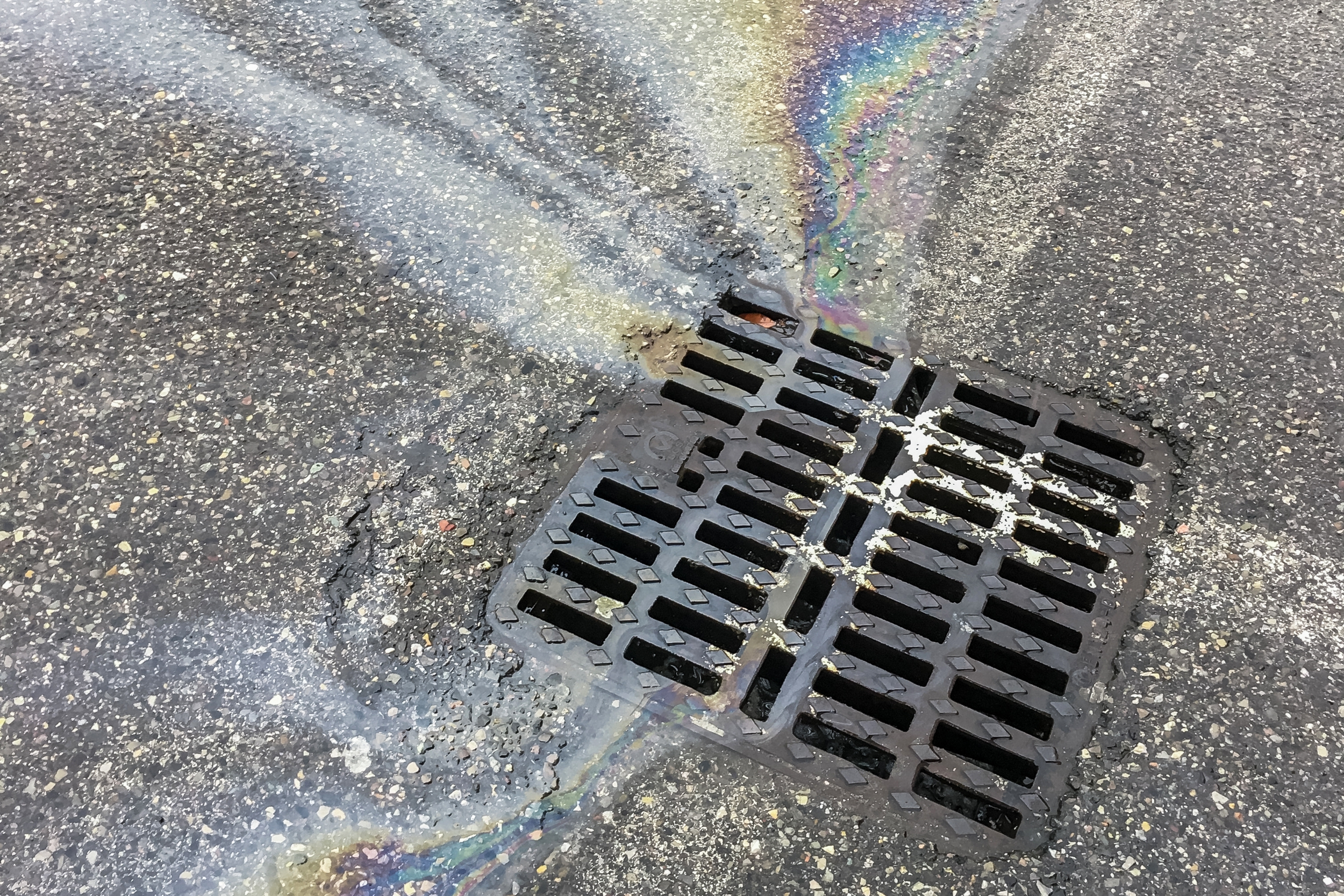
Once a fuel spill occurs, the speed at which it spreads is often underestimated. Fuel will typically flow across hard surfaces and can quickly find its way into drainage systems. From there, it may travel into groundwater or nearby watercourses, significantly increasing the scale of the problem.
A spill that might have been contained within a bund can, within a short period of time, affect a much larger area of land. If drains are not protected or isolated quickly, contamination can spread beyond the site boundary, creating environmental harm and increasing liability.
Acting quickly is one of the most important factors in limiting the overall impact. Deploying a spill kit, using absorbent materials, and preventing oil from entering drains can reduce the extent of contamination. However, once the spill has spread beyond immediate containment, specialist intervention is almost always required to manage the clean up process effectively.
Legal responsibility and the role of the environment agency
The legal framework surrounding oil storage and pollution in the UK is clear, and the consequences of non-compliance are significant. The Environment Agency is responsible for enforcing regulations in England and has the authority to investigate, prosecute, and require remediation following a pollution incident.
Failure to store oil securely or respond appropriately to a spill is considered a criminal offence. Businesses can face non-compliance fines of up to £5,000 per offence, while pollution incidents can result in fines of up to £20,000 in the magistrates’ court. In more serious cases, where the impact is significant or the breach is repeated, cases can be escalated to the Crown Court where fines are unlimited.
There is also the potential for legal action against company directors, particularly where negligence or repeated failure to comply with regulations is identified. Enforcement agencies may issue anti-pollution works notices requiring immediate corrective action, and in some cases, operational permits or licences can be suspended or revoked.
Under the polluter pays principle, the business responsible for the spill is liable for all cleanup and remediation costs. This applies regardless of whether the incident was accidental, meaning that even a small leak can result in substantial financial exposure if it is not managed properly.
Breaking down the clean-up process and associated costs
The clean-up of a fuel spill is not a single-stage activity. It involves a series of coordinated actions, each of which contributes to the overall cost.
Emergency response and initial containment
The first stage of any fuel spill response is containment. This involves preventing further spread and limiting the impact on the surrounding environment. Spill kits, absorbent materials, and temporary barriers are typically used to contain oil at the source. Emergency response contractors are often required to attend the site quickly, and their mobilisation costs can be high, particularly where specialist equipment is needed.
Remediation of soil, groundwater, and surface water
If contamination extends into soil or groundwater, the clean-up process becomes more complex. Excavation of contaminated soil is a common approach, although this can require heavy machinery and off-site disposal, increasing both time and cost. In some cases, in-situ treatment methods such as bioremediation may be used, but these require extended monitoring and specialist expertise.
Where oil reaches a river or other watercourse, additional measures are required to protect aquatic life and restore the affected environment. This often involves ecological assessments, water treatment, and ongoing monitoring, all of which contribute to higher remediation costs.
Waste handling, disposal, and testing
All contaminated materials must be classified and disposed of in accordance with environmental regulations. This includes transportation to licensed facilities, laboratory testing, and detailed documentation to demonstrate compliance. These processes are essential to confirm that the clean up has been carried out to the required standard, but they also add to the overall cost.
Indirect and long-term costs
Beyond the immediate clean-up, businesses must also consider indirect costs. Production losses during site closures or restricted operations can be significant, particularly in industries where downtime directly impacts revenue. Legal costs, increased insurance premiums, and reputational damage can further increase the financial burden.
In many cases, these indirect costs exceed the direct cost of remediation, particularly where the incident affects customers, contracts, or public perception.
Insurance limitations and financial risk
Many businesses assume that insurance will cover the cost of a fuel spill, but this is not always the case. Policies often include exclusions where storage systems were not compliant with regulations or where maintenance requirements were not met.
Insurers may also require prompt notification and evidence that appropriate steps were taken to contain and manage the spill. Failure to act quickly or follow correct procedures can result in claims being denied, leaving the business fully responsible for all associated costs.
Understanding the limitations of insurance cover is therefore an important part of managing risk, particularly for sites that store large volumes of oil.
Environmental impact and long-term consequences
Fuel spills can have a lasting impact on the environment, particularly when contamination reaches soil or groundwater. Oil can prevent water absorption in soil, affecting plant growth and leading to long-term damage to vegetation. When groundwater is affected, the consequences can extend far beyond the original site, potentially impacting drinking water sources and surrounding land.
Contamination of rivers and surface water can harm aquatic life and disrupt local ecosystems. In some cases, the full impact of a fuel spill may not become apparent until months or years after the incident, particularly where contamination has migrated through the ground.
These long-term environmental consequences are a key reason why regulators take such a strict approach to enforcement and why businesses must take proactive steps to reduce risk.
Reducing the risk of a fuel spill
Preventing a fuel spill is significantly more cost-effective than managing the clean-up. Secondary containment systems, such as bunds, play a critical role in limiting the spread of oil and protecting the surrounding environment.
Regular inspection and maintenance are equally important. Identifying signs of corrosion, leaks, or structural weakness early can prevent small issues from developing into larger failures. Overfill prevention systems and proper transfer procedures can further reduce the risk of a spill occurring during delivery or handling.
Drain mapping and site planning are also essential, as they help ensure that any spill can be contained before it reaches sensitive areas. Having a well-stocked spill kit and ensuring staff are trained in emergency response procedures can significantly limit the impact of an incident.
What to do when a spill occurs
If an fuel spill does occur, immediate action is required to limit damage and reduce costs. The first priority is to stop the leak at its source, where it is safe to do so. Containment measures should then be deployed to prevent the spill from spreading, particularly towards drains or watercourses.
The Environment Agency must be notified where required, and a professional clean-up contractor should be contacted as soon as possible. Attempting to carry out a full clean-up without specialist support can worsen contamination and increase both costs and liability.
Accurate records of the incident, including photographs and actions taken, can also support regulatory compliance and insurance claims.
How we help prevent fuel spill costs
At The Petrol Tank Company, our approach is focused on prevention and compliance. We help businesses identify risks within their fuel storage systems and take practical steps to reduce the likelihood of a fuel spill.
Our inspection services are designed to provide a clear assessment of tank condition, containment effectiveness, and overall compliance with current regulations. We look for early signs of failure, assess the adequacy of bunding and containment measures, and identify site-specific risks that could increase the impact of a spill.
Regular inspections are an important factor in maintaining safe and compliant storage systems, particularly for sites that rely on fuel in their daily operations.
Why choose The Petrol Tank Company
At The Petrol Tank Company, we specialise in compliant fuel storage for commercial operators across the UK. We design, supply and install bunded fuel tanks that meet current oil storage regulations and help reduce the risk of fuel spills from the outset.
Our team understands how storage systems perform in real conditions. We do not simply supply a tank. We assess your site, review bunding and containment, consider drainage and layout, and identify how a spill would behave if one occurred. This allows us to address risks early and ensure your installation meets the legal requirements applicable to your operation.
We also provide ongoing inspection and maintenance support. Through our dedicated inspection services, we help operators identify issues such as corrosion, leaks, and inadequate containment before they lead to a spill. This reduces the likelihood of clean-up costs, enforcement action, and disruption to your business.
For commercial sites storing fuel, compliance and risk management should not be assumed. They should be confirmed through proper assessment, installation, and ongoing inspection by specialists who understand the details.
Summary
Fuel spill clean up costs can increase quickly depending on the size of the spill, where it occurs, and how quickly it is contained. Even a small fuel spill can lead to environmental damage and legal liability if it is not managed properly from the outset.
In most cases, these incidents are preventable. Proper fuel storage, regular inspection, and effective containment reduce the likelihood of a spill and limit how far it can spread if one occurs.
If a spill does happen, immediate action is critical. Using a spill kit, protecting drains, and bringing in professional clean up support helps contain the situation and reduces the overall cost and impact.
For businesses storing fuel, the priority is straightforward. Keep systems compliant, identify risks early, and ensure any spill can be contained before it becomes a more serious and costly problem.
Frequently Asked Questions
-
Fuel spill clean up costs are mainly influenced by the volume released, the type of fuel or oil, and how far it spreads across the site. Costs increase significantly if contamination reaches drains, groundwater, or nearby watercourses, as more complex remediation is required.
-
Under UK regulations, the business or individual responsible for the incident is liable for all clean up and remediation costs. This applies even if the release was accidental and is enforced under the polluter pays principle.
-
Insurance may cover some costs, but many policies include exclusions where storage systems were not compliant or properly maintained. If legal requirements have not been met, insurers may refuse to pay, leaving the business fully responsible.
-
The first step is to stop the source where it is safe to do so. The affected area should then be contained using absorbent materials and a spill kit, with drains protected to prevent spread. The Environment Agency should be notified where required, and a professional clean up contractor contacted.
-
The most effective approach is proper storage and maintenance. This includes using bunded tanks, carrying out regular inspections, maintaining pipework, and ensuring containment measures are in place. Identifying issues early helps prevent small leaks from developing into more serious incidents.
